

Many people do not realise the extent to which diet influences mental health and the occurrence of depressive disorders. Tryptophan is an essential amino acid that the body cannot produce on its own — it must be supplied through food. Found in milk proteins, meat, fish, eggs, and legumes, it is the direct dietary precursor to serotonin and melatonin: two of the most important molecules governing mood, sleep, and emotional wellbeing. Its role in mental health and sleep quality makes it one of the more clinically relevant amino acids in daily supplementation practice.
The Tryptophan–Serotonin–Melatonin Pathway
Tryptophan's central significance lies in a biochemical conversion chain: dietary tryptophan is absorbed into the bloodstream and crosses the blood-brain barrier, where it is converted to 5-hydroxytryptophan (5-HTP) and subsequently to serotonin. Serotonin is the neurotransmitter most closely associated with mood regulation, emotional stability, appetite control, and social behaviour. In the pineal gland, serotonin is further converted to melatonin — the hormone responsible for regulating the circadian sleep-wake cycle.
This pathway explains why tryptophan deficiency has such wide-ranging consequences. Low tryptophan availability reduces serotonin synthesis, which is associated with low mood, anxiety, irritability, impaired impulse control, and increased sensitivity to stress. Reduced serotonin also limits melatonin production, producing sleep difficulties — difficulty falling asleep, poor sleep continuity, and non-restorative sleep — which themselves compound mood and cognitive problems. Our sleep support collection includes tryptophan and 5-HTP alongside other sleep-supportive compounds.
Effects on Mood, Anxiety, and Depression
The relationship between tryptophan and mood is mechanistically well-grounded and supported by clinical research. Studies using acute tryptophan depletion — a technique that temporarily reduces brain tryptophan availability — reliably produce low mood, increased anxiety, and reduced stress tolerance in healthy participants, demonstrating its causal role in serotonergic function.
Supplemental L-tryptophan has been studied as a support for mood and mild depressive symptoms, with several trials demonstrating improvements comparable to low-dose antidepressants in non-clinical populations. 5-HTP, the immediate downstream metabolite of tryptophan, is also widely studied in this context and generally shows more consistent bioavailability, as it bypasses the rate-limiting conversion step. Both are used as nutritional supports for mood and anxiety — distinct from pharmaceutical antidepressants but with their own evidence base. Our brain and cognitive health collection includes both tryptophan and 5-HTP options.
Tryptophan and Sleep
Tryptophan's role as the biochemical precursor to melatonin makes it directly relevant for sleep. When cortisol (the stress hormone) is chronically elevated and melatonin production is suppressed — a pattern common in people under sustained stress or with disrupted day-night cycles — the tryptophan-to-melatonin pathway becomes critically important. Supplementing tryptophan in the evening, when conversion to melatonin is hormonally favoured, may help support natural sleep onset and maintenance.
For people whose sleep difficulties are related to low mood or anxiety rather than a primary circadian disruption, tryptophan's serotonergic pathway addresses both the mood dimension and the downstream sleep impairment simultaneously — which is why it is commonly recommended as a first-line nutritional approach for stress-related insomnia.
Tryptophan with Vitamin B6 and Magnesium
The conversion of tryptophan to serotonin requires vitamin B6 as an essential co-factor — specifically in the pyridoxal phosphate-dependent decarboxylation step that converts 5-HTP to serotonin. Without adequate B6, this step is impaired regardless of tryptophan availability. Similarly, magnesium supports multiple enzymatic steps in neurotransmitter metabolism and contributes to both nervous system function and sleep quality independently. Combining tryptophan with vitamin B6 and magnesium is therefore not merely a marketing convenience — it reflects the actual biochemical dependencies of the serotonin synthesis pathway. Many quality tryptophan formulations include these co-factors. Our vitamin B collection includes B6 in multiple forms, including the active P-5-P form.
Other Roles of Tryptophan
Beyond its serotonin pathway, tryptophan has several additional physiological functions worth noting. It participates in the synthesis of niacin (vitamin B3) — a conversion that accounts for a small proportion of dietary niacin in humans. It supports normal immune function, with research suggesting adequate tryptophan status is associated with improved immune resilience. In breastfeeding women, tryptophan plays a role in the normal development of lactation. It also supports the normal function of the reproductive system — a likely indirect effect through its influence on hormonal balance and nervous system function.
Food Sources of Tryptophan
Tryptophan is present in most protein-containing foods, but concentrations vary considerably. The richest dietary sources include:
- Dairy products — milk, cheese (especially hard cheese), and yogurt are among the most concentrated sources; warm milk's traditional association with sleep has a biochemical basis
- Fish and seafood — particularly salmon, tuna, and cod
- Lean meat — turkey, chicken, and pork
- Eggs
- Legumes — soya and soy products, beans, lentils
- Pumpkin and sunflower seeds
- Nuts
One important nuance: tryptophan competes for transport across the blood-brain barrier with other large neutral amino acids (LNAAs), including leucine, valine, and isoleucine. Consuming tryptophan-rich foods alongside a small amount of carbohydrate — which stimulates insulin and reduces competing amino acid levels — enhances brain tryptophan uptake. This is the physiological basis for the mood-supportive and sleep-promoting effects of evening carbohydrates often observed in practice.
Deficiency Signs and Who Is at Risk
Tryptophan deficiency can arise from insufficient dietary protein, diets very low in the specific foods listed above, or conditions that impair protein absorption. Common signs of insufficient tryptophan include:
- Persistent low mood, apathy, and lack of motivation
- Anxiety, irritability, and emotional instability
- Sleep difficulties — particularly difficulty falling asleep and non-restorative sleep
- Mood swings and increased sensitivity to stress
- Reduced immune resilience
- In severe or prolonged deficiency, symptoms of niacin deficiency may emerge
Groups at elevated risk include strict vegans with limited legume intake, people under chronic psychological stress (which accelerates tryptophan consumption), older adults with reduced protein intake, and people with gastrointestinal conditions that impair amino acid absorption.


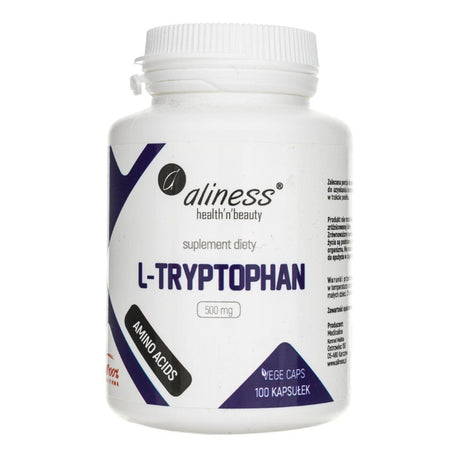


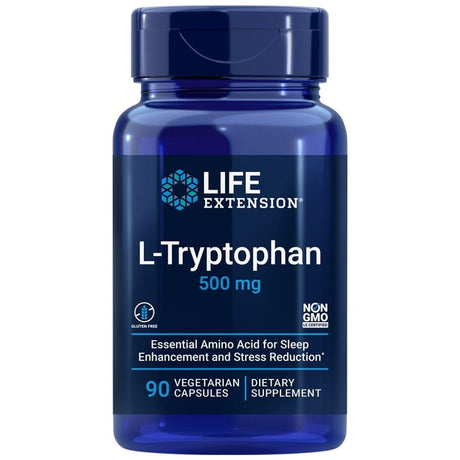

Life Extension
Life Extension L-Tryptophan 500 mg - 90 Capsules
Regular price €28.99Unit price€0.32 each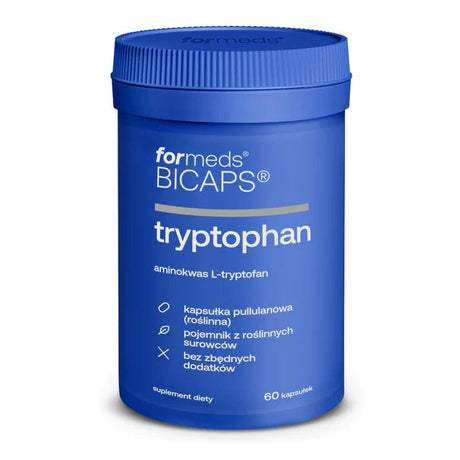 10% off
Formeds
Formeds Bicaps Tryptophan 500 mg - 60 Capsules
Sale price €13.39 Regular price €14.89Unit price€0.22 each


Browse our full amino acids collection for tryptophan, 5-HTP, and related supplements.
This article is for information only and does not replace medical advice. If you have health concerns, are pregnant, breastfeeding or taking medication, consult a doctor or pharmacist. Dietary supplements are not a substitute for a varied diet.


