

Collagen is the most abundant protein in the human body, accounting for roughly a third of total protein mass. It is the primary structural component of connective tissue — providing tensile strength to tendons and ligaments, maintaining skin firmness and elasticity, and giving cartilage its shock-absorbing qualities. From the mid-twenties onwards, the body's natural collagen synthesis begins a gradual and steady decline, while simultaneously the quality of existing collagen fibres deteriorates under the influence of free radicals, UV exposure, and reduced levels of the cofactors needed for collagen production — notably vitamins A, C, E, and copper. The visible and functional consequences of this process are familiar: wrinkles, reduced skin elasticity, joint discomfort, and changes in hair and nail quality. Understanding what collagen does, where it comes from, and how best to supplement it is therefore increasingly relevant for anyone with an interest in healthy ageing.
The Structure and Types of Collagen
Collagen is not a single compound but a family of structurally related proteins. Over 28 types have been identified, though a handful account for the majority of collagen in the human body:
- Type I — the most abundant, found in skin, tendons, bones, and teeth. The primary target of most beauty-focused collagen supplements.
- Type II — the dominant form in cartilage, making it the focus of joint health research and supplementation.
- Type III — found alongside Type I in skin, blood vessels, and internal organs; important for skin structure and vascular integrity.
All collagen types share the same basic structural feature: three polypeptide chains wound into a characteristic triple helix, which gives collagen its remarkable tensile strength. This structure is dependent on adequate proline and glycine (the two dominant amino acids in collagen) as well as vitamin C, which is essential for the enzymatic cross-linking that stabilises the triple helix. Explore our dedicated collagen supplements collection for the full range available at Medpak.
Natural Sources and the Limitations of Dietary Collagen
Collagen is found in animal-derived foods — particularly in cuts and preparations rich in connective tissue: slow-cooked bone broths, pork knuckle, cartilaginous fish, poultry skin, and traditional jellied meat dishes. These foods contain gelatin, which is partially hydrolysed collagen, and provide the amino acids proline, glycine, and hydroxyproline that the body can use in collagen synthesis.
However, dietary collagen from whole food sources presents a bioavailability challenge. Intact collagen molecules are large and are broken down during digestion into their constituent amino acids and short peptides. The body then reassembles these building blocks according to its own priorities — there is no guarantee that ingested collagen amino acids will be directed specifically towards skin or joint collagen. This is the key limitation of relying on dietary sources alone, and the rationale for the development of specialised hydrolysed collagen peptides for supplementation.
Hydrolysed Collagen: Why Form Matters
The most significant advancement in collagen supplementation has been the development of hydrolysed collagen (also called collagen peptides or collagen hydrolysate). In this process, native collagen — typically derived from bovine hide or cartilage, porcine sources, or marine (fish) skin — is enzymatically broken down into short-chain peptides of low molecular weight. These smaller peptides are absorbed more efficiently from the gastrointestinal tract compared to intact collagen protein, and research suggests that specific peptide sequences may directly stimulate fibroblast activity in the skin and chondrocyte activity in cartilage.
Marine collagen, derived from the skin of sea fish, is of particular interest because it is predominantly Type I collagen with a peptide profile considered to be structurally close to human skin collagen. It is also preferred by those who avoid mammalian-derived products for dietary or religious reasons. Studies on fish-derived collagen peptides have shown promising results in skin hydration, elasticity, and wrinkle reduction metrics in human clinical trials, though results vary by product, dose, and study duration.
Collagen for Skin Health
Skin collagen — primarily Types I and III — is responsible for the structural support that keeps skin firm, smooth, and well-hydrated. As collagen density declines with age, the extracellular matrix loses its structural integrity, leading to the formation of wrinkles, reduced moisture retention, and a loss of overall skin tone. Environmental factors — UV radiation, pollution, smoking, and chronic oxidative stress — accelerate this process beyond what would occur through ageing alone.
Research on oral hydrolysed collagen supplementation for skin outcomes has grown substantially in recent years. Multiple randomised controlled trials have reported improvements in skin hydration, elasticity, and wrinkle depth scores following daily supplementation, typically in the range of 2.5–10 g of collagen peptides per day over 8–12 weeks. The proposed mechanism is that specific bioactive peptides derived from hydrolysed collagen signal fibroblasts in the dermis to increase their own collagen production. Those looking to complement oral supplementation with topical care can explore our hair, skin and nails supplements collection for additional relevant products.
Collagen for Joint and Bone Health
Type II collagen is the principal structural protein of articular cartilage — the smooth tissue that cushions joints and allows frictionless movement. As cartilage collagen content decreases with age or through mechanical wear, joint comfort and mobility can be significantly affected. This is the biological context for the considerable research interest in collagen supplementation for joint support.
Two main approaches have been studied: hydrolysed collagen peptides (which provide amino acid substrates for cartilage repair) and undenatured Type II collagen (UC-II), which works via a different mechanism — oral tolerance — to modulate the immune response to cartilage tissue. Several clinical trials have shown statistically significant improvements in joint comfort scores for both approaches, with UC-II showing effects at particularly low doses (40 mg/day). Collagen is also a significant component of bone matrix, and some research suggests collagen supplementation may support bone mineral density alongside other bone health interventions. Browse our bone, joint and cartilage supplements for a broad range of options.
Collagen Formats: Choosing the Right Option
Collagen supplements are available in several formats, each with practical trade-offs:
- Liquid collagen — typically marine collagen dissolved in water, often with added vitamin C and hyaluronic acid. Convenient and requires no preparation; typically provides 5,000–10,000 mg per serving.
- Powder — hydrolysed collagen peptides in unflavoured or lightly flavoured form, easily mixed into drinks or food. Allows flexible dosing and tends to be cost-effective per gram of collagen.
- Capsules and tablets — standardised doses, convenient, and tasteless; generally provide lower per-serving amounts (400–1,000 mg), making them better suited for supplementation at the lower end of the researched dosage range, particularly for UC-II formulations.
For skin-focused applications, daily doses in clinical research typically range from 2.5 g to 10 g of hydrolysed collagen peptides. For joint support, both hydrolysed collagen at 5–10 g and undenatured Type II collagen at 40 mg have shown effects. Consistent daily use for a minimum of 8–12 weeks is generally required before results become apparent.
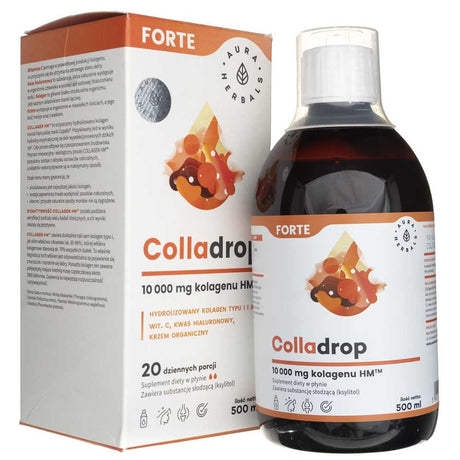


Aura Herbals
Aura Herbals Colladrop Forte Marine Collagen 10000 mg - 500 ml
Regular price €26.59Unit price€53.18 /L


Aura Herbals
Aura Herbals Colladrop Flex - marine collagen 5000 mg - 500 ml
Regular price €21.89Unit price€43.78 /L


 5% off
Aura Herbals
Aura Herbals Colladrop Glow Marine Collagen 5000 mg - 500 ml
Sale price €19.46 Regular price €20.49Unit price€38.92 /L

 15% off
Nordic Naturals
Nordic Naturals Marine Collagen with Vitamin C Strawberry - 150 g
Sale price €37.89 Regular price €44.69Unit price€252.60 /kg
 10% off
Doctor's Best
Doctor's Best Pure Collagen Types 1 and 3 Powder - 200 g
Sale price €20.09 Regular price €22.39Unit price€100.45 /kg


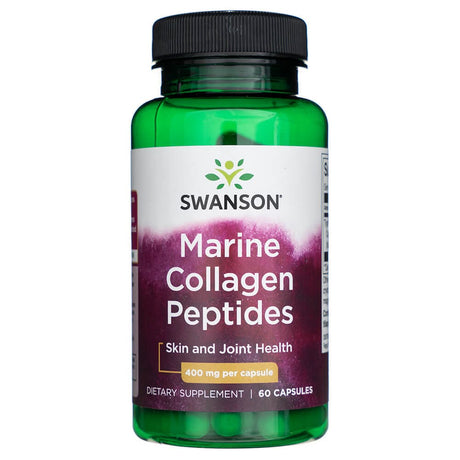


Swanson
Swanson Type I Hydrolyzed Marine Collagen Peptides 400 mg - 60 Capsules
Regular price €7.89Unit price€0.13 each
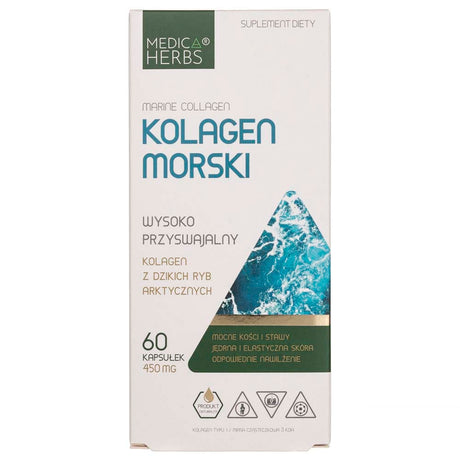


Medica Herbs
Medica Herbs Marine Collagen 450 mg - 60 Capsules
Regular price €5.89Unit price€0.10 each


This article is for information only and does not replace medical advice. If you have health concerns, are pregnant, breastfeeding or taking medication, consult a doctor or pharmacist. Dietary supplements are not a substitute for a varied diet.


