

Much of what we throw away does not disappear — it persists on land and in waterways for decades, sometimes centuries. Personal hygiene products are an unavoidable part of life, but conventional options carry a hidden environmental cost that adds up dramatically over a lifetime. The good news is that genuinely effective, plastic-free, and chemical-free alternatives now exist for every need — and most people who switch never look back. Here is what you need to know about eco-friendly period products.
Why Conventional Hygiene Products Are a Problem
The numbers are striking: menstruation affects approximately 800 million people worldwide every single day. Over a lifetime, that adds up to roughly 350–450 menstrual cycles and about 2,100 days of bleeding — around 6 years in total. Research estimates that a single person may use up to 11,000 pads and tampons during their lifetime, at a cumulative cost of thousands of euros.
The environmental burden is equally significant. Conventional pads, tampons, and liners typically contain plastic components — wrappers, applicators, backing strips, and synthetic fibres — that can take up to 450 years to degrade, releasing harmful substances as they break down. Even the cotton in many conventional products is problematic: to achieve the bright white appearance associated with cleanliness, manufacturers often bleach it with chlorine, generating dioxins in the process. According to the US Environmental Protection Agency, dioxins are serious health hazards — suppressing normal immune function, acting as carcinogens, and potentially disrupting the reproductive system. Additional ingredients such as synthetic fragrances and insecticides further compound the concern.
The Menstrual Cup — A Lasting Alternative
The menstrual cup is not a new invention — it was first developed in 1932. Unlike pads and tampons, it does not absorb fluid; it collects it. The cup is a flexible, funnel-shaped device, most commonly made from medical-grade silicone, which is inserted into the vagina where it forms a light seal. It does not interfere with vaginal flora and does not increase infection risk when used correctly.
With proper care — thorough washing between uses and sterilisation between cycles — a menstrual cup can last up to 12 years. This makes it both the most economical and the most environmentally impactful option: one product, used for a decade or more, replacing thousands of disposable items.
How to Use a Menstrual Cup
First-time users often need two or three cycles to become fully comfortable — though many find insertion easier than tampons because the silicone surface is smooth and creates no friction. Wash hands thoroughly before insertion. Fold the cup, insert it low in the vaginal canal (not as deep as a tampon), and allow it to unfold and create suction. If correctly positioned, it should be comfortable and leak-free. Depending on flow, it can be worn for up to 12 hours before emptying. To remove, pinch the base to release the seal and slide it out gently, then rinse and reinsert or wash before storage.
Choosing the right size matters — it depends on anatomy, age, flow intensity, and whether the person has given birth vaginally. Sizing guidance is always provided on the packaging and by manufacturers, and most brands offer at least two sizes.

Biodegradable Pads and Tampons
For those who prefer disposable products — whether by habit, preference, or situation — biodegradable alternatives made from organic cotton offer a significantly better option than conventional equivalents. Natural materials degrade in months rather than centuries, and organic cotton production avoids the synthetic pesticides, artificial fertilisers, and chemical processing that contaminate both the environment and the final product.
Organic cotton is naturally breathable and highly absorbent, and because it is unbleached or bleached without chlorine, it contains none of the dioxin-generating residues found in many conventional products. The result is a product that is gentler on sensitive skin, does not disrupt vaginal flora, and does not carry the same long-term contamination risk — while performing identically to conventional equivalents in use.
Biodegradable intimate hygiene products are suitable for all skin types, including sensitive and reactive skin, and are a responsible choice for anyone concerned about the long-term health implications of the substances in contact with intimate areas throughout a lifetime.
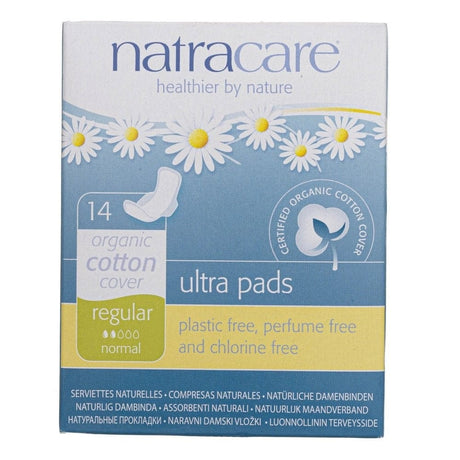

Natracare
Natracare Ecological Sanitary Pads Ultra Regular - 14 pieces
Regular price €4.79Unit price€0.34 each


Natracare
Natracare Ecological Sanitary Pads Ultra Long with Wings - 10 pieces
Regular price €4.59Unit price€0.46 each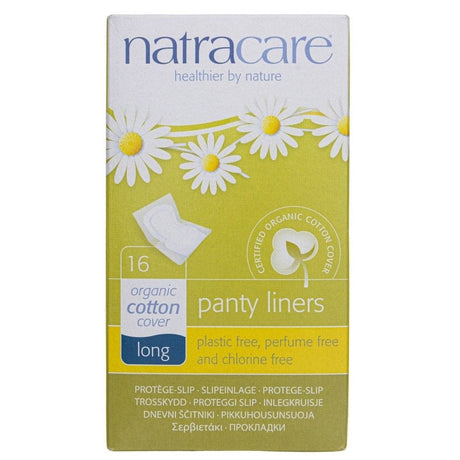
 6% off
Natracare
Natracare Sanitary Pads Long - 16 pieces
Sale price €3.19 Regular price €3.39Unit price€0.20 each


Natural Organic Cotton Pads and Liners
The range of organic and biodegradable options extends across all product types — from ultra-thin daytime pads and winged super-absorbency options to night pads and organic applicator tampons. Brands specialising in this category formulate their products entirely around natural materials, without synthetic cores, plastic layers, or chlorine bleaching. Whether you are looking for daily liners, regular daytime protection, or heavy-flow overnight coverage, there is a natural alternative that matches conventional products in absorbency and comfort while eliminating the environmental and health concerns.
Explore the full selection of natural period care and personal hygiene products in our intimate hygiene range and our broader eco zone collection at Medpak.


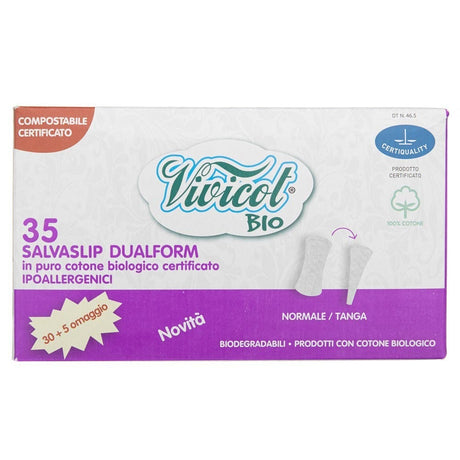


Vivicot
Vivicot Organic Cotton Dualform Sanitary Pads - 35 Pieces
Regular price €3.69Unit price€0.11 each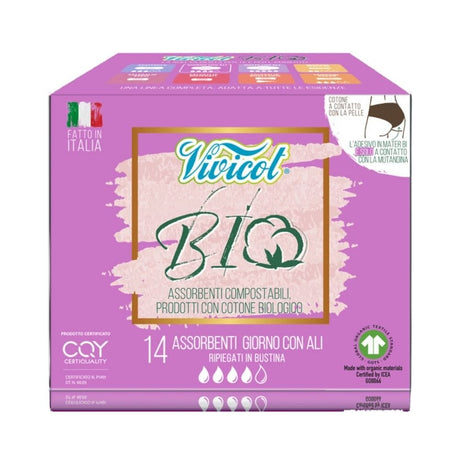
Vivicot
Vivicot Biodegradable Daytime Sanitary Towels with Wings - 14 Pieces
Regular price €4.49Unit price€0.32 each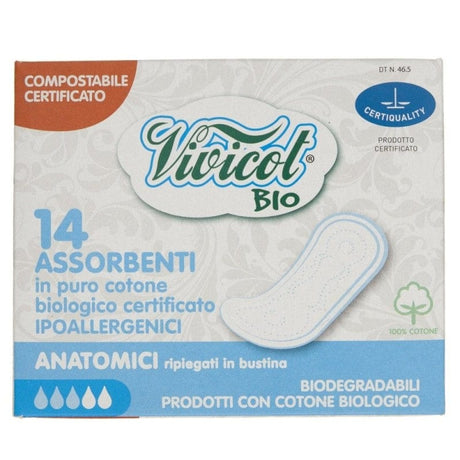

Vivicot
Vivicot Biodegradable Ultra-Thin Sanitary Towels - 14 pieces
Regular price €2.79Unit price€0.20 each
Vivicot
Vivicot Biodegradable Night Pads with Wings - 10 pieces
Regular price €3.39Unit price€0.34 each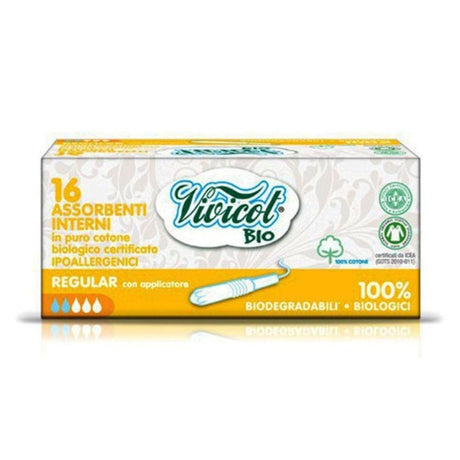
Vivicot
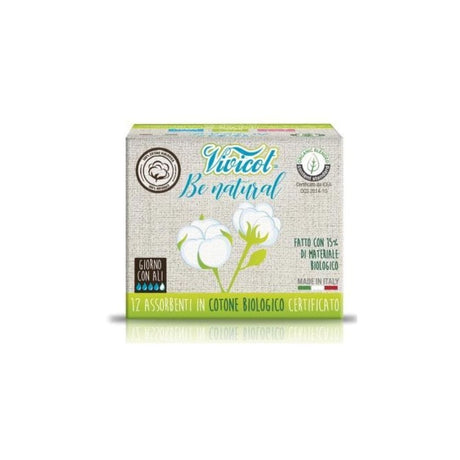
Vivicot Be Natural DaytimeSanitary Towels - 12 Pieces
Regular price €2.99Unit price€0.25 each


Making the Switch
The transition to natural period products does not require any compromise on performance. The same categories — daytime pads, night pads, tampons, liners — are all available in organic and biodegradable formats. The difference is what goes into them, what they leave behind in your body, and how long they remain in the environment afterwards.
For those ready to commit to the most zero-waste option, a menstrual cup eliminates virtually all disposable waste for years. For those who prefer disposables, switching to organic cotton products with no chlorine bleaching or synthetic additives is a meaningful step — for personal health and for the environment. Both paths lead in the same direction: less waste, fewer harmful substances, and a more considered approach to a product that most people use every month for decades. Browse our personal care and beauty range for the full selection.
This article is for information only and does not replace medical advice. If you have health concerns, are pregnant, breastfeeding or taking medication, consult a doctor or pharmacist. Dietary supplements are not a substitute for a varied diet.


