

Essential polyunsaturated fatty acids are among the most important nutrients that the human body cannot synthesise in adequate quantities on its own. Of these, omega-3 and omega-6 fatty acids have attracted the most sustained scientific attention — and for good reason. They are structural components of every cell membrane in the body, precursors to hormone-like signalling molecules, and play foundational roles in cardiovascular health, brain development, immune function, and inflammation regulation. Understanding what they do, where they come from, and — critically — the importance of their balance is essential for anyone seeking to use fatty acid supplementation intelligently.
What Are Omega-3 and Omega-6 Fatty Acids?
Both omega-3 and omega-6 fatty acids are polyunsaturated fatty acids (PUFAs), distinguished by the position of their first carbon-carbon double bond. They are termed "essential" because the body cannot produce them from scratch and must obtain them from food or supplements.
The most biologically significant omega-3 fatty acids are:
- EPA (eicosapentaenoic acid) — primarily found in marine sources; involved in anti-inflammatory signalling and cardiovascular health
- DHA (docosahexaenoic acid) — the dominant structural fatty acid in brain tissue and the retina; critical for neurological development and function
- ALA (alpha-linolenic acid) — found in plant sources such as flaxseed and chia; the body can convert ALA to EPA and DHA, but this conversion is inefficient, typically yielding very small amounts
The primary omega-6 fatty acid in the diet is linoleic acid (LA), found in vegetable oils such as sunflower, corn, and soybean oil. The body converts LA into arachidonic acid (AA), which serves as a precursor to pro-inflammatory eicosanoids — signalling molecules that have important roles in immune response, but which can contribute to chronic low-grade inflammation when produced in excess. Explore our dedicated fish oil and omega-3 supplements collection to see the full range of options.
The Importance of the Omega-3 to Omega-6 Ratio
The relationship between omega-3 and omega-6 intake is one of the most important — and most commonly misunderstood — aspects of fatty acid nutrition. EPA and DHA (omega-3) compete with arachidonic acid (omega-6) for the same enzymes and ultimately produce signalling molecules with broadly opposing effects: omega-3 derived eicosanoids tend to be anti-inflammatory, while those derived from omega-6 tend to be pro-inflammatory.
In ancestral dietary environments, the estimated omega-6 to omega-3 ratio was approximately 4:1 or lower. In modern Western diets, dominated by processed vegetable oils and reduced oily fish consumption, this ratio is estimated to be closer to 15:1 to 20:1. This imbalance is widely considered by researchers to be a contributing factor to the prevalence of chronic inflammatory conditions. The practical implication is clear: for most people in Europe and beyond, the priority is not to supplement omega-6 further, but to significantly increase omega-3 intake — particularly EPA and DHA from marine sources — to rebalance this ratio.
Natural Dietary Sources
Omega-3 (EPA and DHA) are found primarily in:
- Fatty cold-water fish — salmon, mackerel, sardines, herring, anchovies, sprats, tuna
- Caviar and shellfish
- Fermented cod liver oil — a traditional, whole-food source providing EPA and DHA alongside fat-soluble vitamins A and D
- Krill oil — an alternative marine source with phospholipid-bound omega-3 that may offer enhanced bioavailability
Omega-3 (ALA) is found in plant sources including flaxseed, chia seeds, hemp seeds, walnuts, and rapeseed oil. Omega-6 (LA) is abundant in sunflower oil, corn oil, soybean oil, and most processed foods made with these oils — making it genuinely difficult to be deficient in omega-6 on a modern diet. Our cardiovascular supplements collection includes omega-3 options alongside other heart health products for those with a specific focus on circulatory health.
Cardiovascular Health
The cardiovascular benefits of EPA and DHA are among the most extensively studied in nutritional science and have achieved official regulatory recognition. EPA and DHA contribute to the normal function of the heart — an approved health claim under EU regulation — at a daily dose of 250 mg. At higher doses (2–4 g/day), omega-3 fatty acids have been shown in clinical research to reduce elevated triglyceride levels, a significant independent cardiovascular risk factor. EPA and DHA also support healthy endothelial function and may help maintain normal blood pressure when taken at 3 g per day.
The mechanistic basis for these effects includes the incorporation of EPA and DHA into cell membranes (improving membrane fluidity and receptor function), the production of anti-inflammatory resolvins and protectins, and direct effects on lipid metabolism in the liver. Randomised controlled trials have produced mixed results on hard cardiovascular endpoints, but the weight of evidence supports a meaningful role for omega-3 supplementation in cardiovascular risk management, particularly in those with elevated triglycerides or low dietary fish intake.
Brain Development and Cognitive Function
DHA is the dominant structural fatty acid in the brain, accounting for approximately 30–40% of the fatty acids in the cerebral cortex. It is essential for the formation of neuronal cell membranes, synaptic function, and the transmission of nerve signals. This makes DHA nutritionally critical across the entire lifespan — from foetal brain development through to cognitive maintenance in older age.
During pregnancy and infancy, adequate DHA intake is particularly important. Foetal and infant brain development depends heavily on maternal DHA transfer via the placenta and breast milk. Research supports supplementation with DHA during pregnancy and breastfeeding for both maternal health and infant neurological development. For children and adolescents, regular omega-3 intake is associated in observational research with improved attention, learning capacity, and memory performance, though individual results vary. Explore our children's health supplements for DHA formulations designed specifically for younger age groups.
Immune Function and Inflammation
EPA and DHA serve as precursors to a family of lipid mediators — including resolvins, protectins, and maresins — that play active roles in resolving inflammatory responses. Unlike simply suppressing inflammation (as anti-inflammatory drugs do), these omega-3 derived mediators help the body actively return to immune homeostasis after a challenge. This makes adequate omega-3 status relevant not only for those with inflammatory conditions but as a general foundation for healthy immune function.
Omega-3 supplementation has been studied in the context of a range of immune-related and inflammatory conditions, with promising results across allergic disease, respiratory health, and autoimmune contexts. The evidence base is strongest for high-dose EPA/DHA in specific clinical populations; for general immune support, regular dietary omega-3 intake or moderate supplementation (1–2 g EPA+DHA per day) represents a sensible baseline.
Choosing an Omega-3 Supplement
The most important factor when selecting an omega-3 supplement is the actual EPA and DHA content per serving, not the total fish oil or omega-3 label claim. A product labelled "1,000 mg fish oil" may contain only 300 mg of EPA+DHA. For cardiovascular and general health purposes, a daily intake of 500 mg–1,000 mg EPA+DHA is a widely cited starting point; higher doses (2–4 g) are used in specific clinical applications.
Additional considerations include the triglyceride versus ethyl ester form (triglyceride form is generally better absorbed), molecular distillation for purity, and the choice between fish oil, krill oil (phospholipid form, potentially enhanced bioavailability), and fermented cod liver oil (a whole-food format providing additional fat-soluble vitamins).
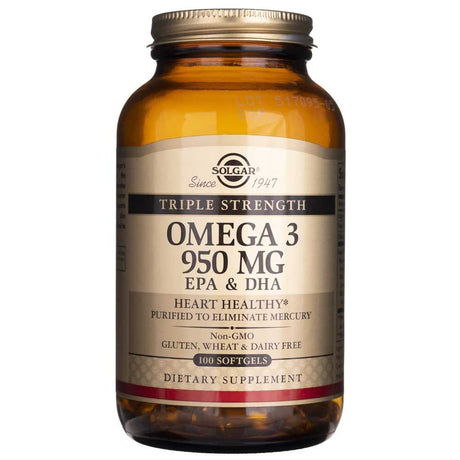


Solgar
Solgar Triple Strength Omega 3 950 mg - 100 Softgels
Regular price €40.99Unit price€0.41 each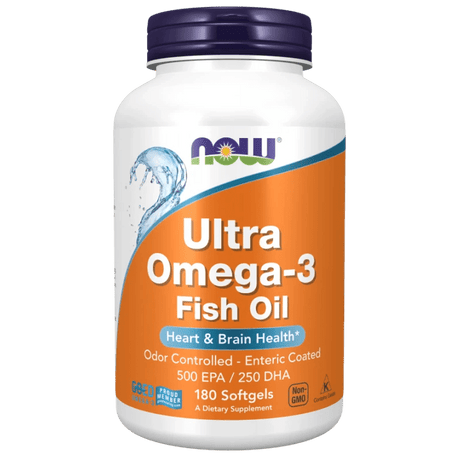
Now Foods
Now Foods Ultra Omega-3, 500 EPA / 250 DHA - 180 Softgels
Regular price €39.99Unit price€0.22 each


Aliness
Aliness Krill Oil NKO Omega 3 with Astaxanthin 500 mg - 60 Capsules
Regular price €16.19Unit price€0.27 each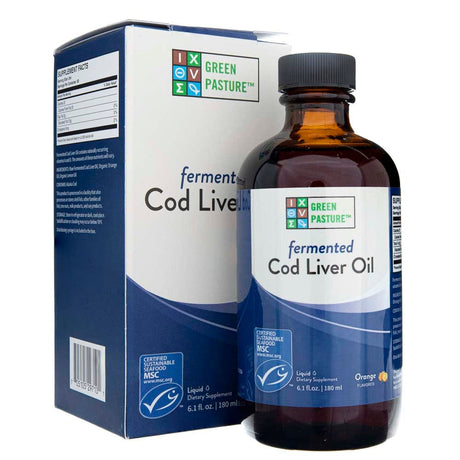


Green Pasture
Green Pasture Fermented Cod Liver Oil, Orange - 176 ml
Regular price €50.19Unit price€27.88 /100ml


For children, pregnancy, and specialised formats:



Nordic Naturals
Nordic Naturals Children's DHA, strawberry flavour - 119 ml
Regular price €19.29Unit price€162.10 /L


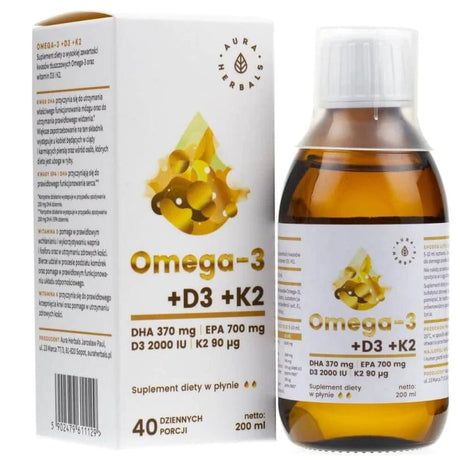


Aura Herbals
Aura Herbals Omega-3 (370 DHA) + D3 (2000IU) + K2MK7, liquid - 200 ml
Regular price €16.49Unit price€82.45 /L


This article is for information only and does not replace medical advice. If you have health concerns, are pregnant, breastfeeding or taking medication, consult a doctor or pharmacist. Dietary supplements are not a substitute for a varied diet.


