

Traditional Chinese medicine has relied on Angelica sinensis — known in the West as dong quai — for over two thousand years, earning it the enduring title of "female ginseng." Deeply rooted in East Asian healing traditions, this member of the carrot and celery family has now made its way into global conversations about women's health, where it is valued for its phytoestrogenic properties and its traditionally recognised role in supporting hormonal balance across all stages of a woman's life.
What Is Dong Quai (Angelica Sinensis)?
Dong quai — known in Poland as dzięgiel chiński — is a perennial plant native to the high mountain regions of China, where it grows at altitude in provinces including Gansu, Sichuan, and Yunnan. The plant takes approximately three years to reach full maturity, after which its roots are harvested and dried for use. It was introduced to Europe in the 19th century, where it was used in a preparation called Eumenol, formulated to address menstrual and menopausal complaints — an application that remains its primary use to this day.
The root contains a complex array of active constituents, including ligustilide, carvacrol, palmitic acid, linoleic acid, phytosterols, and coumarins. Together these compounds contribute to a broad phytochemical profile responsible for dong quai's traditionally recognised properties.
Key Properties of Dong Quai
Phytoestrogenic and Hormonal Regulation
Dong quai is one of the richest botanical sources of phytoestrogens — plant-derived compounds that interact with oestrogen receptors in the body. This makes it a plant of particular interest for women experiencing reduced oestrogen production during perimenopause and menopause. Research suggests that phytoestrogens in dong quai may act as a natural hormonal modulator: providing mild oestrogenic activity where oestrogen levels are low, while potentially exerting a competitive, moderating effect when levels are excessive.
Studies conducted in the early 21st century reported promising findings in menopausal women, with participants experiencing notable reductions in hot flushes and night sweats. These results reflect the herb's traditional application rather than confirmed clinical efficacy, and individual responses will vary.
Analgesic, Anti-inflammatory, and Antispasmodic Effects
Ligustilide, one of dong quai's primary active compounds, demonstrates antispasmodic activity — it may help modulate uterine muscle contractions and support microcirculation in uterine tissue. This is the basis for dong quai's long-standing traditional use for dysmenorrhoea (painful menstruation), as well as PMS-related discomfort, lower back pain associated with the menstrual cycle, and headaches. Its anti-inflammatory properties may further contribute to reducing the discomfort associated with menstruation and other inflammatory processes.
Cardiovascular Circulation Support
Dong quai has traditionally been used to stimulate blood flow and support cardiovascular function. In Chinese medicine, it has been applied in the management of poor circulation, anaemia, and blood-related deficiencies. Some research has examined its potential role in supporting normal cholesterol levels and cardiac function, though these applications should be understood in the context of traditional use rather than as established therapeutic claims. Those with existing cardiovascular conditions should seek medical advice before use — see the warning below.
Immune System Modulation
Polysaccharides isolated from Angelica sinensis have been studied for their effects on immune system regulation. Some research suggests these compounds may have antibacterial properties and support normal immune response, with traditional applications including prevention of bronchial and respiratory tract infections. Explore our broader immune system supplement range for complementary options.
What Is Dong Quai Used For?
Menstrual Discomfort and Cycle Regulation
Dong quai's most established traditional application is menstrual support. It has been used for centuries to help address painful or irregular menstruation, reduce cramping, and ease the discomfort that many women experience throughout the cycle. Its antispasmodic and analgesic properties are considered central to this role.
Perimenopause and Menopause
As oestrogen levels decline during perimenopause and menopause, dong quai's phytoestrogens may help moderate some of the associated symptoms — including hot flushes, night sweats, sleep disturbances, and headaches. It is frequently used as part of a broader botanical approach to menopause support, often in combination with other phytoestrogenic plants such as red clover or black cohosh.
Endometriosis Support
Through its antispasmodic and circulation-supporting properties, dong quai has been traditionally associated with supporting women experiencing endometriosis. Ligustilide may help reduce uterine muscle spasm and improve microcirculation in endometrial tissue, potentially lessening the discomfort associated with endometrial movement during menstruation. This is a traditional application and is not a substitute for medical treatment.
Hormonal Balance and Fertility Preparation
Excess testosterone in women can disrupt ovulation, menstrual regularity, libido, and mood. The active compounds in dong quai are traditionally understood to help moderate testosterone levels, supporting hormonal equilibrium as a basis for regular cycle function. It is worth noting that dong quai should not be used during pregnancy — its role is in preparation and cycle support, not in pregnancy itself.
Bone Health
Some research has examined dong quai's potential role in supporting bone mineral density in the context of menopausal oestrogen loss. Oestrogen is a key regulator of bone remodelling, and its decline during menopause is associated with increased bone loss. Dong quai's phytoestrogens may offer modest support in this area, complementing a broader approach to bone and joint health.
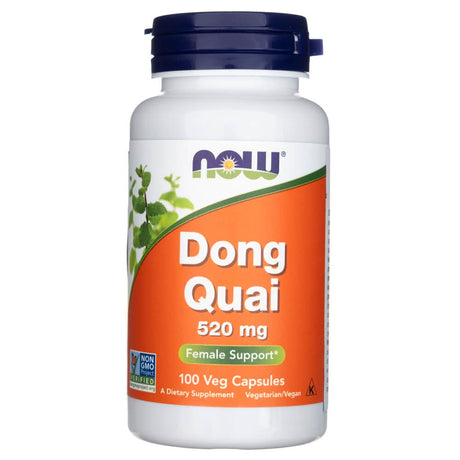



 16% off
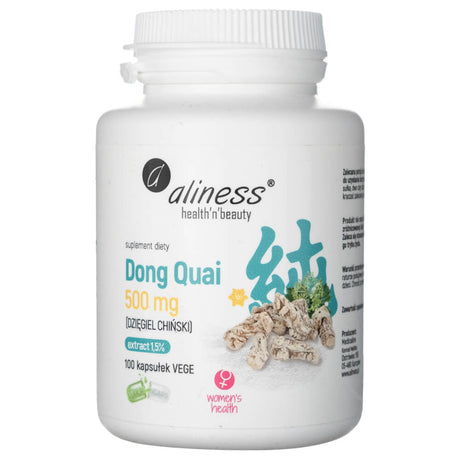
Aliness
Aliness Dong Quai 500 mg - 100 Veg Capsules
Sale price €8.99 Regular price €10.69Unit price€0.09 each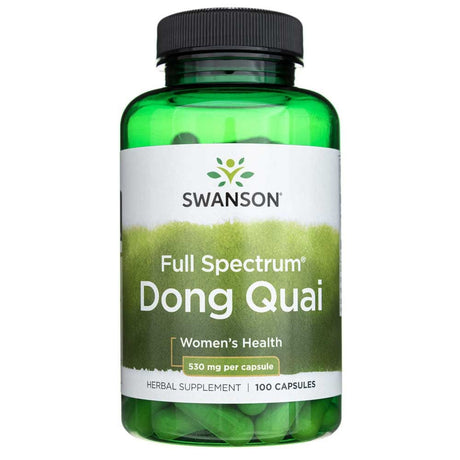


Swanson
Swanson Full Spectrum Dong Quai 530 mg - 100 Capsules
Regular price €6.99Unit price€0.07 each

 25% off
Vitaler's
Vitaler's Dong Quai (Chinese Angelica) 500 mg - 60 Capsules
Sale price €4.26 Regular price €5.69Unit price€0.07 each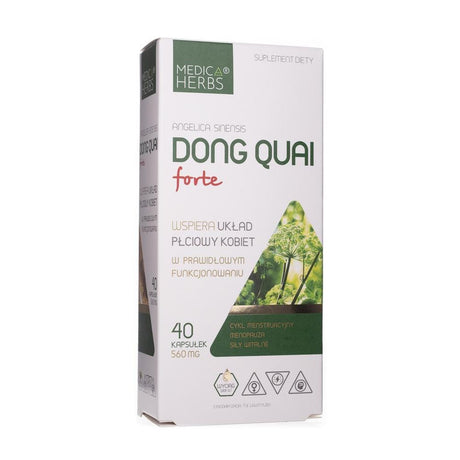

 11% off
Medica Herbs
Medica Herbs Dong Quai Forte 560 mg - 40 Capsules
Sale price €5.49 Regular price €6.19Unit price€0.14 each


Dosage and Forms
Dong quai is available in several supplemental formats. As a raw decoction (boiled root preparation in the traditional Chinese style), typical doses range from 3 to 15 g of dried root per day. In standardised supplement form — capsules or tablets — dosage generally falls between 75 and 500 mg of extract per day, taken with meals and according to the manufacturer's specific instructions. Quality and concentration vary between products, so following individual product labelling is important.
Browse our full selection of herbal supplements to compare available dong quai formats and complementary botanicals.
This article is for information only and does not replace medical advice. If you have health concerns, are pregnant, breastfeeding or taking medication, consult a doctor or pharmacist. Dietary supplements are not a substitute for a varied diet.


